

Last updated: 4th June 2026
I walk into the room and feel like people are looking at me.
The majority are good, caring, exhausted parents who are trying their best …


Recommended Reading
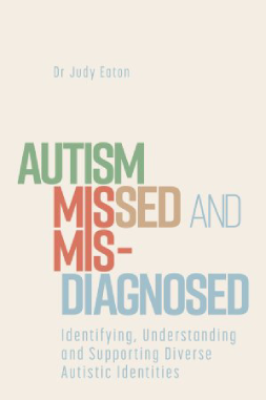
Autism presents in a multitude of different and highly nuanced ways – particularly as it intersects with variance in class, gender, race and age.
Misunderstanding and misinformation around variant and differing presentations means that misdiagnosed individuals and those who do not receive a diagnosis at all are often failed by medical, education, social care and criminal justice systems. They are detained in inappropriate settings; don’t receive beneficial therapeutic input; have their families accused of fabricated or induced illness (FII); are kept in prison or youth offending institutions longer than their original tariffs, and shockingly their life expectancy is often curtailed as a result.
This comprehensive resource will help multidisciplinary professions to understand, contextualise, and better identify diverse autistic presentations. It includes an overview of the autism diagnostic process, an exploration of controversial and commonly confused diagnoses such as PDA, ODD, CD, ASPD, and BPD; discussions of best practice for investigating FII; and analysis of the specific challenges of autism diagnosis in relation to women and girls, BAME communities, schools, and the criminal justice system.
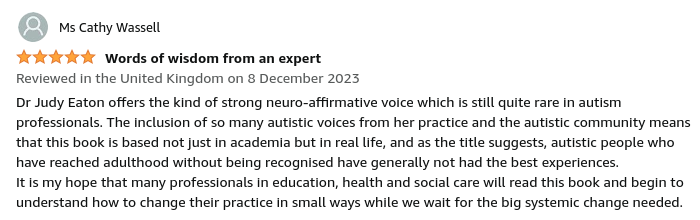
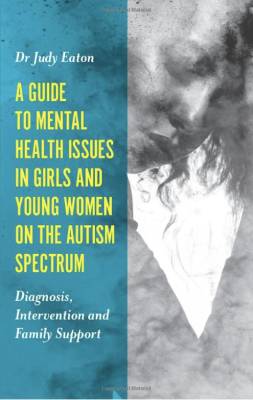
A Guide to Mental Health Issues in Girls and Young Women on the Autism Spectrum: Diagnosis, Intervention and Family Support
This book addresses the specific mental health needs of girls and young women with autism spectrum disorder (ASD). Looking at the ways autism presents differently in girls than in boys, and the mental health conditions that occur most frequently in girls with ASD, this is the essential guide for clinicians and educators on tailoring interventions and support to meet girls’ needs.
Describing the current assessment process for autism diagnosis, the book explains why girls are under-
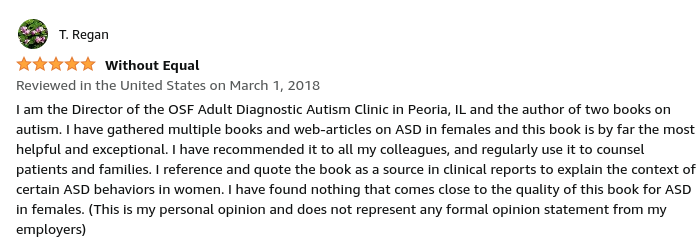
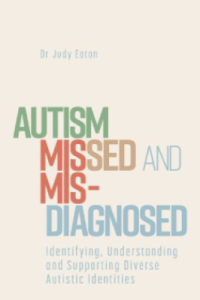
Misunderstanding and misinformation around variant and differing presentations means that misdiagnosed individuals and those who do not receive a diagnosis at all are often failed by medical, education, social care and criminal justice systems. They are detained in inappropriate settings; don’t receive beneficial therapeutic input; have their families accused of fabricated or induced illness (FII); are kept in prison or youth offending institutions longer than their original tariffs, and shockingly their life expectancy is often curtailed as a result.
This comprehensive resource will help multidisciplinary professions to understand, contextualise, and better identify diverse autistic presentations. It includes an overview of the autism diagnostic process, an exploration of controversial and commonly confused diagnoses such as PDA, ODD, CD, ASPD, and BPD; discussions of best practice for investigating FII; and analysis of the specific challenges of autism diagnosis in relation to women and girls, BAME communities, schools, and the criminal justice system.
Available now
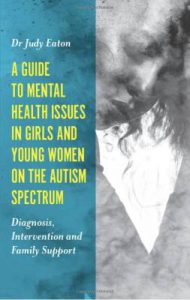
A Guide to Mental Health Issues in Girls and Young Women on the Autism Spectrum: Diagnosis, Intervention and Family Support
This book addresses the specific mental health needs of girls and young women with autism spectrum disorder (ASD). Looking at the ways autism presents differently in girls than in boys, and the mental health conditions that occur most frequently in girls with ASD, this is the essential guide for clinicians and educators on tailoring interventions and support to meet girls’ needs.
Describing the current assessment process for autism diagnosis, the book explains why girls are under-
Related Posts

The ticking clock: why we must act now for the autumn 2026 school transition
Parents of autistic year 4/5 children must act now for the Sept 2026 secondary...

A stitch in time or a lifetime of scars? The urgent case for early autism assessment
Exploring the need for early child autism assessments to prevent a lifetime of...
Watch this space …
Autism, PDA, or Attachment Disorder? Understanding the Diagnostic Confusion In...

Back to school for children with PDA … five years on
Article Updated - September 2022 Since this article was first written in 2017...