




Assessment Payment Plans

Trustpilot

Call us on - 01603 482 503

logologologo
  • My Account
  • Our Services
    • Adult Services
      • Autism Assessments and Diagnosis
      • Therapy
      • Our Pricing – Adult Autism Assessments
    • Child Services
      • Autism Assessments and Diagnosis
      • ADHD Assessments
      • Therapy
  • Right to Choose
  • Resources and Support
    • Guides
    • Assessment Payment Plans
    • Recommended Reading
    • Partnerships
    • Research & Journals
  • About us
    • Why H4P
    • Why we’re here
    • Our Team
    • Work With Us
    • Our Clinics
      • Our Norfolk Clinic
      • Our Midlands Clinic
  • News and Blog
  • FREE Online screening
    • FREE Adult Autism Screening
    • FREE Children’s Autism Screening
    • Autistic Masking Test (CAT-Q)
  • FAQs
  • Contact Us
logologologo
  • My Account
  • Our Services
    • Adult Services
      • Autism Assessments and Diagnosis
      • Therapy
      • Our Pricing – Adult Autism Assessments
    • Child Services
      • Autism Assessments and Diagnosis
      • ADHD Assessments
      • Therapy
  • Right to Choose
  • Resources and Support
    • Guides
    • Assessment Payment Plans
    • Recommended Reading
    • Partnerships
    • Research & Journals
  • About us
    • Why H4P
    • Why we’re here
    • Our Team
    • Work With Us
    • Our Clinics
      • Our Norfolk Clinic
      • Our Midlands Clinic
  • News and Blog
  • FREE Online screening
    • FREE Adult Autism Screening
    • FREE Children’s Autism Screening
    • Autistic Masking Test (CAT-Q)
  • FAQs
  • Contact Us
  • My Account
  • Our Services
    • Adult Services
      • Autism Assessments and Diagnosis
      • Therapy
      • Our Pricing – Adult Autism Assessments
    • Child Services
      • Autism Assessments and Diagnosis
      • ADHD Assessments
      • Therapy
  • Right to Choose
  • Resources and Support
    • Guides
    • Assessment Payment Plans
    • Recommended Reading
    • Partnerships
    • Research & Journals
  • About us
    • Why H4P
    • Why we’re here
    • Our Team
    • Work With Us
    • Our Clinics
      • Our Norfolk Clinic
      • Our Midlands Clinic
  • News and Blog
  • FREE Online screening
    • FREE Adult Autism Screening
    • FREE Children’s Autism Screening
    • Autistic Masking Test (CAT-Q)
  • FAQs
  • Contact Us

Referrals Temporarily Closed

Please note that we are not currently accepting any further Right to Choose referrals for patients who live within the Norfolk and Suffolk area.
This has been agreed with NHS Norfolk and Suffolk ICB, and is due to the high level of demand we have received. Any referral sent to us on or after the 1st of April 2026 from a GP located within Norfolk and Suffolk will not currently be accepted. Once the situation changes, and we are again able to accept new referrals, this will be announced on this page.

Referrals Temporarily Closed

Please note that we are not currently accepting any further Right to Choose referrals for patients who live within the Norfolk and Suffolk area.
This has been agreed with NHS Norfolk and Suffolk ICB, and is due to the high level of demand we have received. Any referral sent to us on or after the 1st of April 2026 from a GP located within Norfolk and Suffolk will not currently be accepted. Once the situation changes, and we are again able to accept new referrals, this will be announced on this page.

NHS Right to Choose for ADHD & Autism Assessments

Help for Psychology has been commissioned by the Norfolk and Suffolk ICB to provide Autism, ADHD, and Combined Autism ADHD assessments for children and young people between 6 and 18 years of age through the Right Choose pathway. Your GP must refer your child to our service.

You can also refer through your GP to Help for Psychology if you live outside of Norfolk and Suffolk. If you live outside of Norfolk and Suffolk, you will need to attend our Norwich clinic for the face-to-face element of the process.

We outline the referral process below.

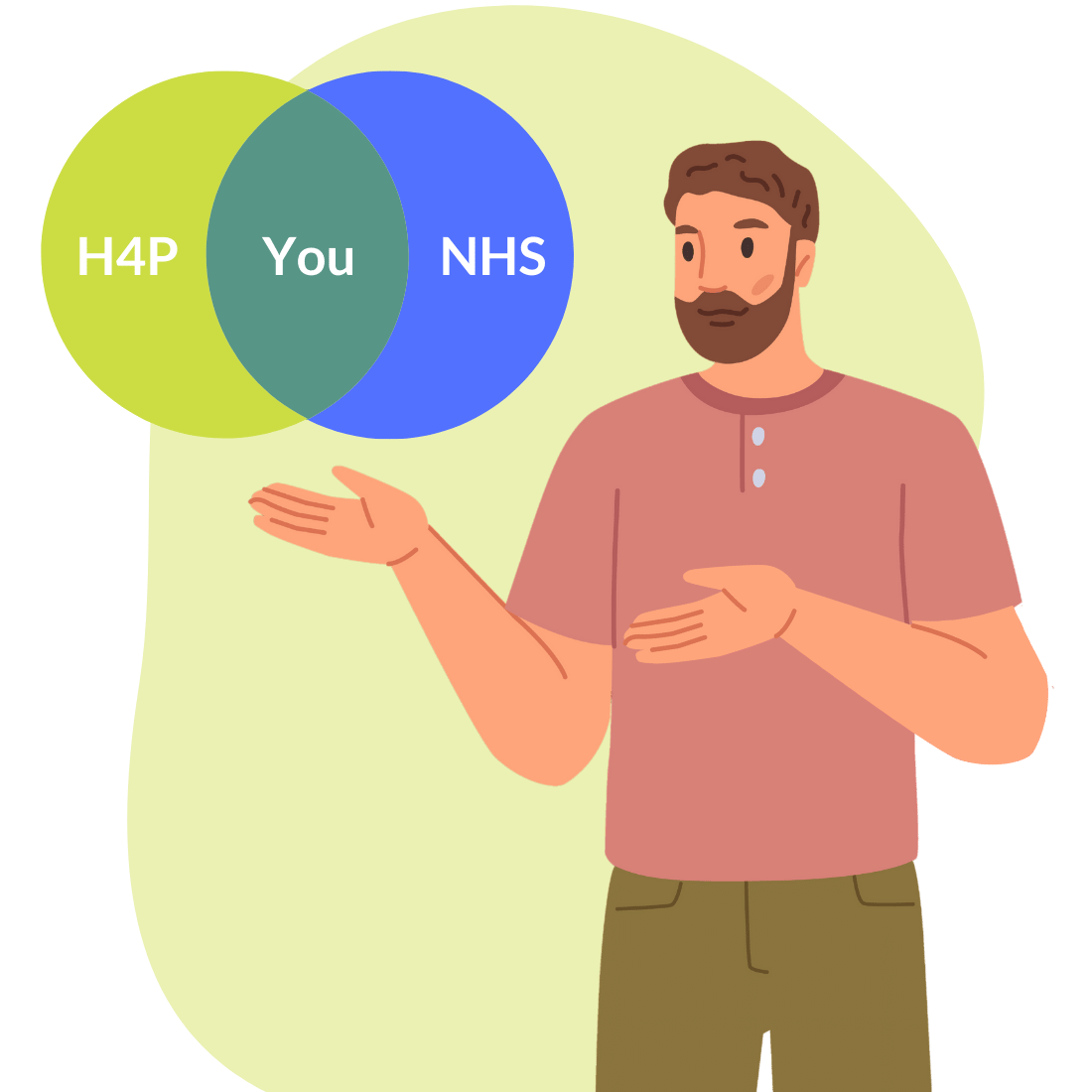
What is Right to Choose?

The NHS Choice Framework gives all registered NHS patients within England* the legal right to choose the hospital or service provider to support their physical and/or mental health care. For example, if a GP refers someone for an ADHD or an autism assessment, that person can choose the provider that best suits their needs. 

Right to Choose means you can decide which organisation will oversee your child’s care as long as they are located in England and fully qualified.

*There are some exceptions, which are listed below.

What is Right to Choose?

The NHS Choice Framework gives all registered NHS patients within England* the legal right to choose the hospital or service provider to support their physical and/or mental health care. For example, if a GP refers someone for an ADHD or an autism assessment, that person can choose the provider that best suits their needs. 

Right to Choose means you can decide which organisation will oversee your child’s care as long as they are located in England and fully qualified.

*There are some exceptions, which are listed below.

what is right to choose venn
wait room seats with clock above

Our Right to Choose wait time

Our estimated wait time for new referrals is 12-18 months.

Our Right to Choose wait time

Our estimated wait time for new referrals is 12-18 months.

Why Choose Help for Psychology?

Help for Psychology can provide autism, ADHD, and combined autism and ADHD assessments for children and young people up to the age of 18. We understand it can be difficult to find the right provider when looking for an autism or ADHD assessment for your child. Here is what we believe sets Help for Psychology apart from many other providers:
white check icon in green circle

Experience

Our clinical team is very experienced in the area of autism and ADHD assessments and is led by our clinical director, who has several decades of experience working specifically in the area of autism and ADHD.
white check icon in green circle

Behind the Mask

One reason some children are missed or misdiagnosed is because of their ability to mask or ‘camouflage’ their true selves. Therefore, many clinicians don’t provide a referral or a diagnosis, as the child doesn’t ‘tick the box’ in terms of how they present during an assessment. The team at Help for Psychology is very experienced in seeing ‘behind the mask’ when carrying out an assessment.
white check icon in green circle

In-Person or Online?

Whilst some providers only offer online assessments, at Help for Psychology, we only offer face-to-face assessments (although developmental histories with parents can be done online). Face-to-face provides more opportunity to better understand the child we are assessing. Equally, if a child masks their presentation, face-to-face assessments are more useful in helping clinicians see ‘behind the mask’ and provide a more accurate diagnosis.
white check icon in green circle

Experience

Our clinical team is very experienced in the area of autism and ADHD assessments and is led by our clinical director, who has several decades of experience working specifically in the area of autism and ADHD.
white check icon in green circle

Behind the Mask

One reason some children are missed or misdiagnosed is their ability to mask or ‘camouflage’ their true self. Therefore, many clinicians don’t provide a referral or a diagnosis, as the child doesn’t ‘tick the box’ in terms of how they present during an assessment. The team at Help for Psychology is very experienced in seeing ‘behind the mask’ when carrying out an assessment.
white check icon in green circle

In-Person or Online?

Whilst some providers only offer online assessments, at Help for Psychology, we only offer face-to-face assessments (although developmental histories with parents can be done online). Face-to-face provides more opportunity to better understand the child we are assessing. Equally, if a child masks their presentation, face-to-face assessments are more useful in helping clinicians see ‘behind the mask’ and provide a more accurate diagnosis.
Learn More About Us

How to be referred via Right to Choose

To refer to our service, the GP will need to complete our referral form. This can be found on the NHS patient records system for GPs within Norfolk & Suffolk, or it is available on our website.
For those who live outside of Norfolk and Suffolk, you will need to complete our referral form and provide it to your GP:

Download PDF
Download and complete the relevant sections for you and your child.

To open and complete this form, you will need to download Adobe Acrobat or any other PDF editor of your choice.

Download PDF Form
Please note –  for those living outside of Norfolk and Suffolk, we will need to agree funding of the assessment with your local ICB prior to us offering an appointment. Once we receive your referral and determine your local ICB, we will be able to advise of any impact this may have on waiting times.
pdf download 2

How to be referred via Right to Choose

To refer to our service, the GP will need to complete our referral form. This can be found on the NHS patient records system for GPs within Norfolk & Suffolk, or it is available on our website.
For those who live outside of Norfolk and Suffolk, you will need to complete our referral form and provide it to your GP:
pdf download 2
Download PDF
Download and complete the relevant sections for you and your child.

To open and complete this form, you will need to download Adobe Acrobat or any other PDF editor of your choice.

Download PDF Form
Please note –  for those living outside of Norfolk and Suffolk, we will need to agree funding of the assessment with your local ICB prior to us offering an appointment. Once we receive your referral and determine your local ICB, we will be able to advise of any impact this may have on waiting times.
18Months
Our estimated wait time for new referrals from outside of Norfolk and Suffolk is 16-18 months.

The Assessment Process

  1. Screening & Review Once we process your referral, we will send you screening documents to complete. Our clinical team reviews this information to ensure that an assessment is the right path for your child at this time.
  2. Scheduling When your child reaches the top of our waiting list, our admin team will contact you to arrange your assessment dates.
  3. Appointment 1: Parent Developmental History The first appointment is for parents only. A clinician will conduct a developmental history interview with you online via Google Meet.
  4. Preparing Your Child Before the face-to-face assessment, we will send you a ‘My Visit’ brochure. This helps your child understand who they will see and what will happen. Parents often tell us this is incredibly useful for reducing their child’s anxiety.
  5. Appointment 2: Child Assessment The second appointment is for your child and is held face-to-face at our Norwich clinic.
  6. Diagnosis & Feedback Our multi-disciplinary team will meet to discuss the findings and determine a diagnosis. A clinician will then contact you to discuss the outcome, followed by a full written diagnostic report.

Right to Choose Exceptions

It is important to note that you cannot access Right to Choose if your child:
  • requires emergency treatment
  • is currently serving a prison sentence (including YOIs), or if they are on temporary release
  • serves in the armed forces (Note: People over the age of 16 can join the armed forces in the UK)
  • is detained in prescribed accommodation
  • has already received care and treatment for the condition (E.g. has already been formally assessed for autism or ADHD by the NHS)
  • is detained in a secure children’s home
  • is detained in a hospital under the Mental Health Act of 1983
have more questions

Still Have Questions?

If any of the information above is unclear or doesn’t quite make sense, please don’t hesitate to contact us at [email protected]. We’ll do our best to respond to your email as soon as possible and provide the assistance you need.

Still Have Questions?

If any of the information above is unclear or doesn’t quite make sense, please don’t hesitate to contact us at [email protected]. We’ll do our best to respond to your email as soon as possible and provide the assistance you need.

FAQs

How can I be referred under Right to Choose?

First you will need to contact your GP and request a referral under Right to Choose. If they agree that your child may be autistic, or have ADHD (or both), and need a formal assessment, you have the legal right to request a provider of your choice, such as Help for Psychology, to carry out the assessment.

Does Right to Choose only cover England?

Yes, unfortunately people living in Scotland, Wales and Northern Ireland are not covered under Right to Choose, only those registered with a GP based in England.

What happens after my child’s assessment?

Following your child’s assessment, the assessing team will have a post-assessment meeting and decide if an autism and/or ADHD diagnosis is appropriate. They will then write a report.

The report will be sent securely via email (or by post if specifically requested) to you as the parent/guardian of the child. The outcome of the assessment will also be shared with your GP. Feedback on the assessment will also be given via your preferred method (i.e. face-to-face/video call).

If my child is diagnosed with ADHD are you able to prescribe medication?

If you live in the Norfolk and Waveney area, and your GP is also based in Norfolk and Waveney, we can offer initiation and titration of ADHD medication following assessment, details can be found on our ADHD page here. However, this is not something we can offer for people living outside the Norfolk and Waveney area.

Can I refer my child to you myself, and bypass my child’s GP?

Unfortunately no. To access a Right to Choose assessment your child’s GP must make the referral.

My child is already on an NHS waiting list for an assessment. Can I transfer them across to Right to Choose?

Yes, provided your child is registered with a GP in England, and that GP agrees to change the referral to a Right to Choose autism or ADHD assessment.

My GP has said Right to Choose is only for adults. Is this correct?

No, Right to Choose is available to both adults and children. However, each provider has a different contract(s), and what they can offer relates to their contract(s). Some providers, for example, can only offer adult autism assessments, others can only offer child autism assessments. Help for Psychology can offer autism, ADHD, and combined autism and ADHD assessments for children and young people between 6 and 18 years of age. At the moment we can’t offer assessments for adults under Right to Choose. (We can, however, offer private autism assessments for both adults and children and private ADHD assessments for children.)

My GP has told me that only providers with a contract with my local ICB can offer assessments via Right to Choose. Is that correct?

No, any provider who has a contract with one ICB based in England can offer Right to Choose across England. However, they can only offer the same service shown within their contract. So, if the contract is only for autism assessments for adults, that is all they can offer. They can’t offer ADHD assessments to any age group, nor autism assessments to children and young people (up to 18 years of age).

My child has already been assessed by the NHS, but did not receive a diagnosis due to school stating that they saw no issues with my child; but this is because my child masks at school. Are you able to reassess my child under Right to Choose?

Unfortunately, one of the exceptions under Right to Choose is that a person who has already been assessed by the NHS cannot access a further assessment under Right to Choose for the same condition. You would need to contact your local ICB to establish if there are any exceptions to this ruling. We are aware that many children ‘mask’ whilst at school, and our Clinical Director has written an article explaining how Autistic Masking can often impact the outcome of an assessment.

Do I have to pay to have my child assessed when using the Right to Choose service?

No, the Right to Choose service we offer is funded entirely by the NHS, so there is no cost to you.

Do you offer Right to Choose for autism and ADHD assessments?

Yes, we can offer an assessment for children and young people (between 6 to 18 years of age), for Autism, ADHD, and Autism and ADHD combined. Currently, we are unable to offer this service for Adults.

What should I do if I wish to make a complaint?

If you wish to make a complaint about any part of our service, please email [email protected].uk. We will acknowledge this within 5 working days and outline the next steps towards a potential resolution.

Related Blog Articles

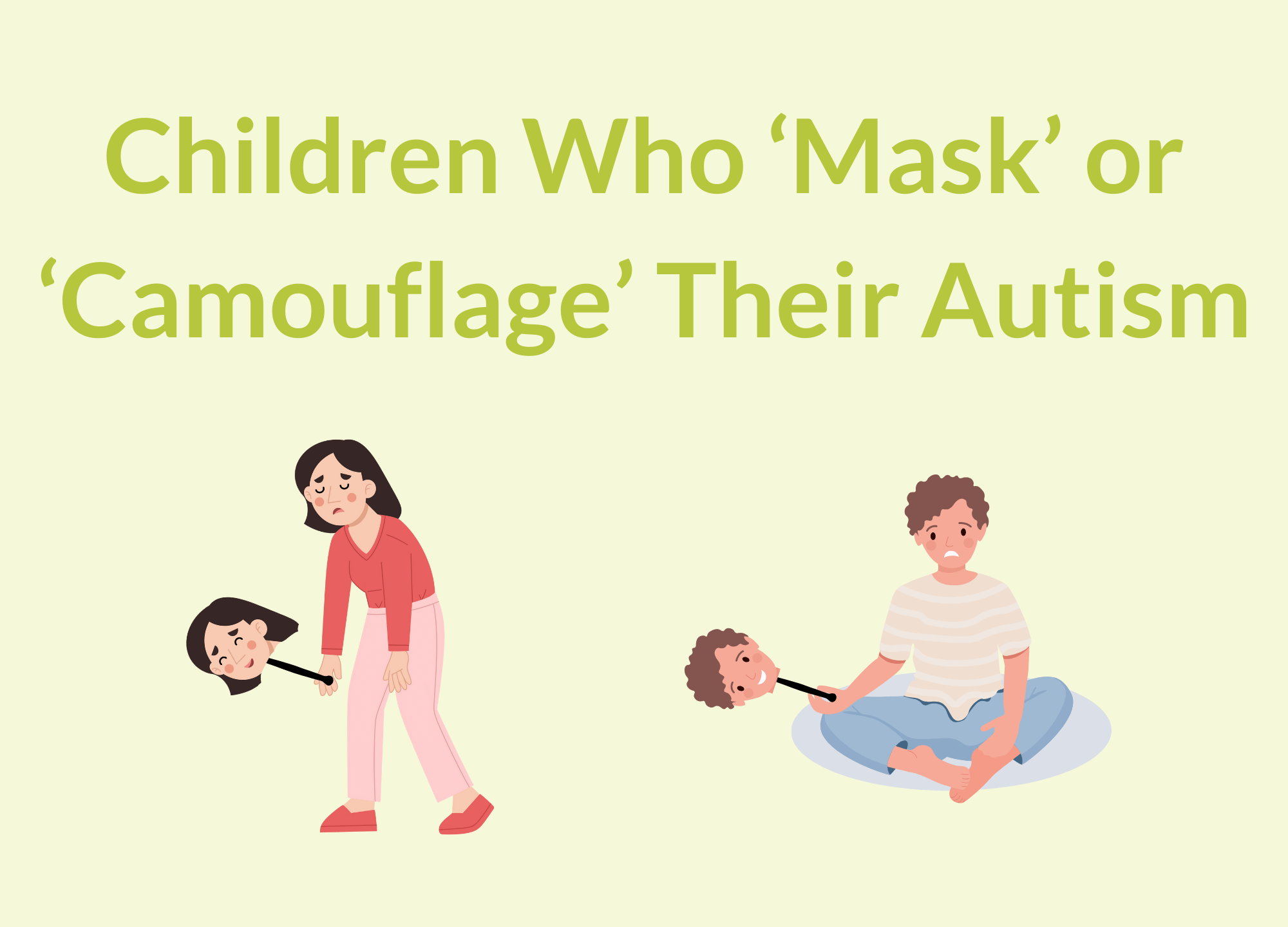
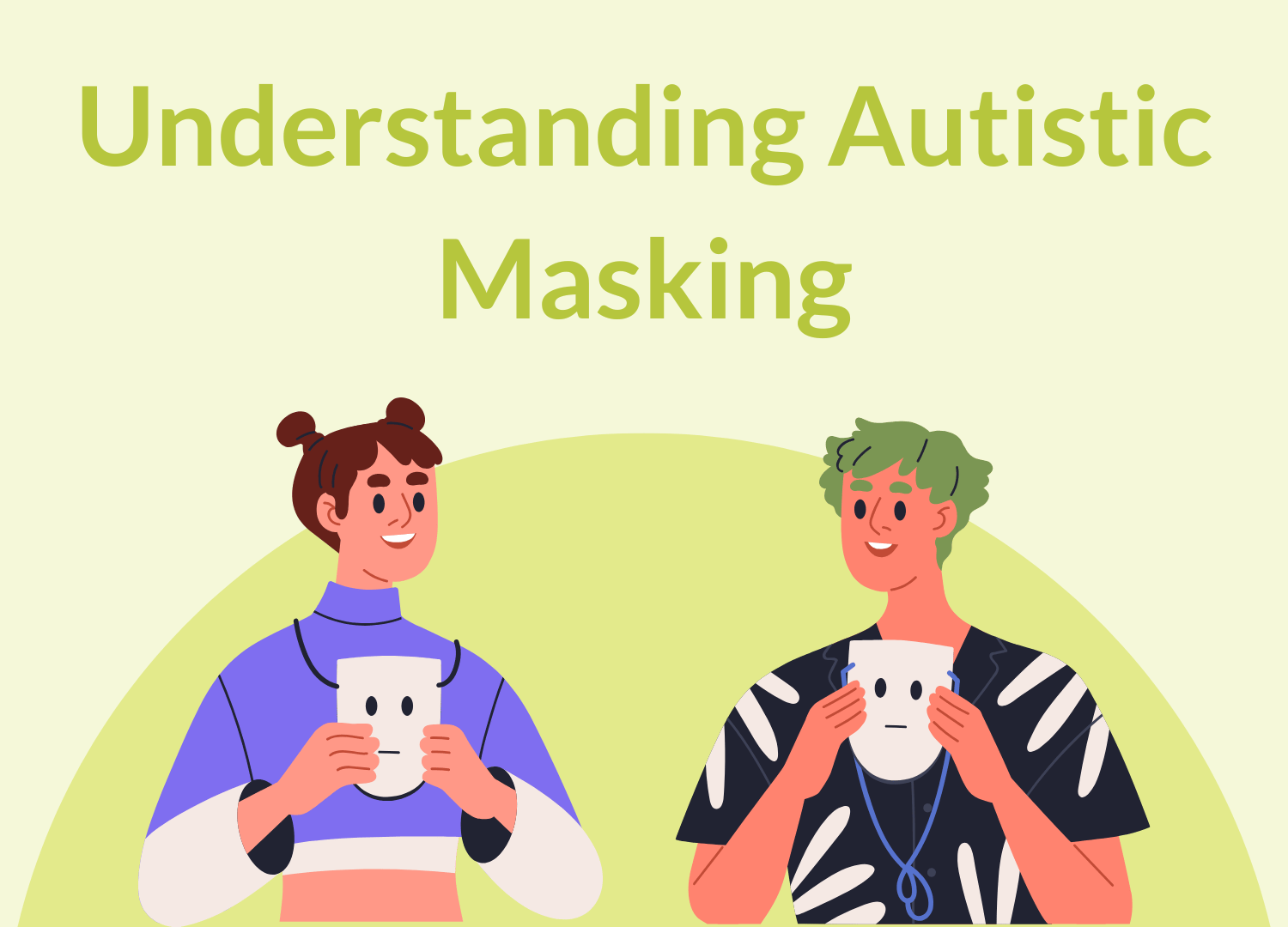
Children Who ‘Mask or ‘Camouflage Their Autism
Sad boy and man are both holding masks depicting happy versions of themselves
understanding autistic masking 1

Recommended Reading

You may also be interested to know that our clinical director, Dr Judy Eaton, has written the following books on the subject of Autism:
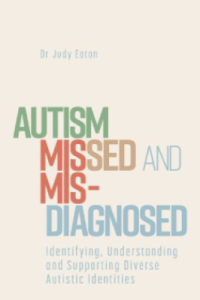
Eaton Autism Missed and Misdiagnosed 1 1
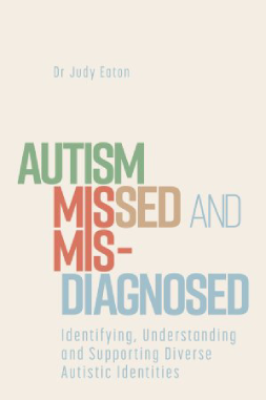
Autism Missed and Misdiagnosed: Identifying, Understanding and Supporting Diverse Autistic Identities
by Dr Judy Eaton

Autism presents in a multitude of different and highly nuanced ways – particularly as it intersects with variance in class, gender, race and age.

Misunderstanding and misinformation around variant and differing presentations means that misdiagnosed individuals and those who do not receive a diagnosis at all are often failed by medical, education, social care and criminal justice systems. They are detained in inappropriate settings; don’t receive beneficial therapeutic input; have their families accused of fabricated or induced illness (FII); are kept in prison or youth offending institutions longer than their original tariffs, and shockingly their life expectancy is often curtailed as a result.

This comprehensive resource will help multidisciplinary professions to understand, contextualise, and better identify diverse autistic presentations. It includes an overview of the autism diagnostic process, an exploration of controversial and commonly confused diagnoses such as PDA, ODD, CD, ASPD, and BPD; discussions of best practice for investigating FII; and analysis of the specific challenges of autism diagnosis in relation to women and girls, BAME communities, schools, and the criminal justice system.
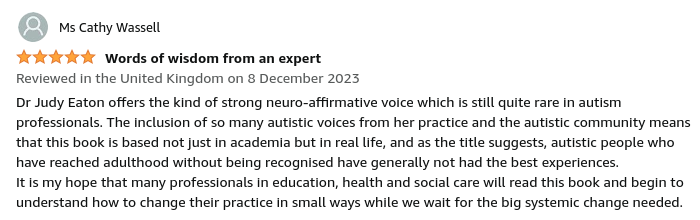
Autism Missed and Misdiagnosed amazon review
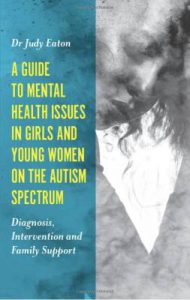
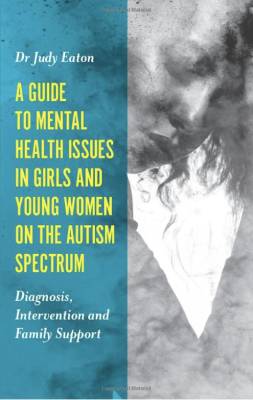
a guide to mental health issues in girls and young women on the autism spectrum book cover

A Guide to Mental Health Issues in Girls and Young Women on the Autism Spectrum: Diagnosis, Intervention and Family Support

by Dr Judy Eaton

This book addresses the specific mental health needs of girls and young women with autism spectrum disorder (ASD). Looking at the ways autism presents differently in girls than in boys, and the mental health conditions that occur most frequently in girls with ASD, this is the essential guide for clinicians and educators on tailoring interventions and support to meet girls' needs.

Describing the current assessment process for autism diagnosis, the book explains why girls are under- or mis-diagnosed, leading to later mental health issues. It outlines the types of intervention that are particularly helpful for working with girls to reduce anxiety, improve social interaction skills, and manage self-harm. The book also covers how to manage eating disorders and feeding difficulties, focusing on working with girls with sensory processing difficulties. There is advice on how to deal with the emotional impact on parents, carers and families, and the challenges they face when negotiating appropriate psychological and educational support.

A Guide to Mental Health Issues in Girls and Young Women on the Autism Spectrum Amazon review
View on Amazon UK
View on Amazon US
View on Amazon UK
View on Amazon US
Eaton Autism Missed and Misdiagnosed 1 1
Autism Missed and Misdiagnosed: Identifying, Understanding and Supporting Diverse Autistic Identities
by Dr Judy Eaton
Autism presents in a multitude of different and highly nuanced ways – particularly as it intersects with variance in class, gender, race and age. Misunderstanding and misinformation around variant and differing presentations means that misdiagnosed individuals and those who do not receive a diagnosis at all are often failed by medical, education, social care and criminal justice systems. They are detained in inappropriate settings; don’t receive beneficial therapeutic input; have their families accused of fabricated or induced illness (FII); are kept in prison or youth offending institutions longer than their original tariffs, and shockingly their life expectancy is often curtailed as a result. This comprehensive resource will help multidisciplinary professions to understand, contextualise, and better identify diverse autistic presentations. It includes an overview of the autism diagnostic process, an exploration of controversial and commonly confused diagnoses such as PDA, ODD, CD, ASPD, and BPD; discussions of best practice for investigating FII; and analysis of the specific challenges of autism diagnosis in relation to women and girls, BAME communities, schools, and the criminal justice system. Available now
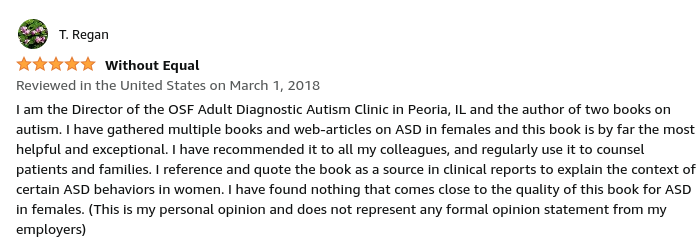
Autism Missed and Misdiagnosed amazon review
View on Amazon UK
View on Amazon US
a guide to mental health issues in girls and young women on the autism spectrum book cover

A Guide to Mental Health Issues in Girls and Young Women on the Autism Spectrum: Diagnosis, Intervention and Family Support

by Dr Judy Eaton

This book addresses the specific mental health needs of girls and young women with autism spectrum disorder (ASD). Looking at the ways autism presents differently in girls than in boys, and the mental health conditions that occur most frequently in girls with ASD, this is the essential guide for clinicians and educators on tailoring interventions and support to meet girls' needs.

Describing the current assessment process for autism diagnosis, the book explains why girls are under- or mis-diagnosed, leading to later mental health issues. It outlines the types of intervention that are particularly helpful for working with girls to reduce anxiety, improve social interaction skills, and manage self-harm. The book also covers how to manage eating disorders and feeding difficulties, focusing on working with girls with sensory processing difficulties. There is advice on how to deal with the emotional impact on parents, carers and families, and the challenges they face when negotiating appropriate psychological and educational support.

A Guide to Mental Health Issues in Girls and Young Women on the Autism Spectrum Amazon review
View on Amazon UK
View on Amazon US
Useful links:
Acceptable Use Policy
Assessment Payment Plans
Consent Preferences
Cookie Policy
Data Subject Request Access
Our Carbon Reduction Plan
Privacy Policy
Safeguarding Policy
Terms and Conditions
Work With Us
Accreditations:
cyber essentials certification badge
Site Secured by:
Follow, Like and Subscribe:
Twitter Facebook Instagram YouTube

Help for Psychology 2025. All Rights Reserved.

Help 4 Psychology Services Ltd is an Introducer Appointed Representative of Ideal Sales Solutions Ltd, t/a Ideal4Finance. Ideal Sales Solutions Ltd is a credit broker and not a lender (FRN 703401). Finance available subject to status. The rate offered is always provisional and will depend upon your personal circumstances, the loan amount and the term.